Lost or delayed luggage: airline compensation explained
Your airline lost or delayed your checked baggage? You may have a right to compensation under the Montreal Convention, the international treaty governing airline liability on most international flights to and from the UK. Airlines may be liable for reasonable expenses caused by delayed baggage and for lost luggage, up to approximately £1,300 per passenger. However, many claims fail because passengers miss deadlines or lack sufficient evidence. This guide explains your rights, claim limits, required evidence, why airlines deny claims, and key deadlines. To maximise your chances of success, consider consulting a consumer rights solicitor for tailored advice on your claim.
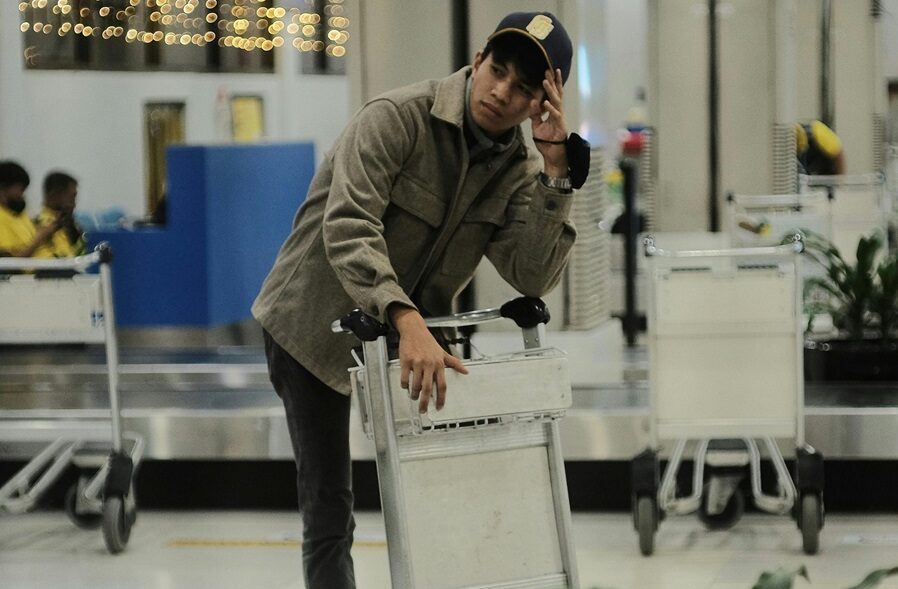
Quick answer: Can you get compensation for lost or delayed luggage?
- Yes, if international: Montreal Convention applies to UK flights. Airlines are generally liable for checked baggage unless they prove an applicable defence such as inherent defect, passenger fault, or excluded items.
- Maximum £1,300: Covers delayed bag expenses or lost luggage value (minus depreciation). Declare higher value at check-in for a fee to increase the limit.
- Report at airport, claim within 21 days: File a Property Irregularity Report (PIR) immediately, then write to the airline with receipts and proof. Missing reporting deadlines can significantly weaken or invalidate a claim.
If your airline refuses compensation, your claim exceeds £1,300, or you’ve suffered significant consequential losses (missed bookings, extra travel costs), consult an aviation law solicitor specialising in Montreal Convention claims.
Can you claim compensation for lost or delayed baggage? Your legal rights explained
Checked baggage delayed, lost, or damaged on an international flight? You have a legal right to claim compensation for lost luggage or delayed baggage compensation under the Montreal Convention 1999, now UK law. Airlines are generally liable for checked baggage loss, damage, or delay unless they can show a recognised defence under the Convention.
The Montreal Convention applies to international flights only. Domestic UK-only flights aren’t covered.
Your claim is valid if:
- Your claim is filed within 2 years of the flight.
- Your flight was international (departing or arriving at a UK airport).
- You reported the problem to the airline at the airport or in writing.
- Baggage was checked-in (cabin baggage requires proving airline fault).
- You have evidence (boarding pass, baggage tags, receipts, Property Irregularity Report).
How airline compensation works under the Montreal Convention
Under the Montreal Convention, airlines are generally liable for checked baggage loss or damage without the passenger needing to prove negligence. Article 22 then sets the financial liability limits.
In practice, here’s how it works:
- You report the problem and provide evidence.
- The airline either pays, disputes your claim, or asserts a legal defence.
- If they refuse, escalate to the UK Civil Aviation Authority (CAA), an Alternative Dispute Resolution (ADR) scheme, or small claims court.
Delayed baggage: what you can claim
Delayed baggage occurs when your checked luggage doesn’t arrive with you at your destination but the airline still possesses it.
Under Article 19 of the Montreal Convention, you can claim reasonable expenses incurred because your baggage was delayed, provided you report within the specified timeframe.
What counts as “reasonable expenses”:
- Toiletries and basic cosmetics (full reimbursement).
- Laundry costs if delayed beyond 48 hours away from home.
- Essential medications or medical supplies if replacements were necessary.
- Change of clothing (typically 50% of purchase price, as clothing is reusable).
Airlines won’t reimburse:
- Lost income or missed events.
- Luxury goods or designer items.
- Entertainment, books, or non-essentials.
- Services (haircuts, dry cleaning beyond basics).
- Alcohol or restaurant meals beyond necessities.
Maximum compensation is 1,519 Special Drawing Rights (approximately £1,300 per passenger), although actual reimbursement depends on documented expenses.
Deadline:
Notify the airline in writing within 21 days of receiving your delayed baggage, with receipts for all purchases.
Lost luggage: what you can claim and maximum compensation
Luggage is officially declared “lost” 21 days after arrival if the airline hasn’t found it.
Maximum compensation: 1,519 Special Drawing Rights (SDRs), approximately £1,300 per passenger. This is a hard ceiling unless you declared higher value at check-in and paid an additional fee.
Under Article 22(3) of the Montreal Convention, you can declare higher baggage value at check-in for a fee to increase your compensation limit beyond £1,300. Most passengers don’t know this option exists.
Depreciation reduces your payout. Airlines deduct 10–30% per year of the suitcase’s original purchase price. A 5-year-old suitcase bought for £200 might be valued at £70–£100, not “new for old.”
Airlines commonly exclude:
- Items damaged by your packing.
- Sports equipment (skiing, diving gear).
- Fragile items (unless declared and fees paid).
- Perishables (food, alcohol, unpacked toiletries).
- Valuable or luxury items (jewellery, designer goods, electronics).
Claim deadline:
Legal action for loss, delay, or damage must be brought within two years.
What evidence do you need for a lost luggage compensation claim?
Airlines reject claims lacking proper evidence. Collect and submit these documents as early as possible:
- Boarding pass: Proves you flew the claimed flight.
- Photos of damage: Clear images showing the exact condition.
- Baggage tags: Numbered labels linking your luggage to the airline.
- Receipts for purchases (delayed baggage): Itemised, dated proof of expenses.
- Purchase receipts (lost baggage): Original receipts, credit card statements, or bank records proving what was inside.
- Property Irregularity Report (PIR): The official airport form. Your strongest piece of evidence. Get a copy before leaving the airport.
Strengthens your claim further:
- Flight booking confirmation.
- Video footage from the airport.
- Email confirmations from the airline.
- Witness statements from travelling companions.
Why airlines reject baggage claims: common defences
Under the Montreal Convention, airlines may avoid liability if they can demonstrate certain recognised defences or exclusions:
| Defense | How airlines claim it | Your counter |
|---|---|---|
| Inherent defect | “The suitcase had a manufacturing fault” | Provide receipt showing you bought it new; submit pre-travel photos |
| Your packing | “You packed carelessly or overfilled it” | Photograph your packed bag; prove it was within airline size/weight limits |
| Excluded items | “You packed fragile/valuable items without declaring them” | Declare high-value items in writing at check-in; keep the receipt |
| Missed deadline | “You didn’t report within 7–21 days” | Report immediately at airport; keep timestamped proof of written notification |
| Late claim | “You used your bag before claiming damage” | Inspect and report damage the same day you receive it |
| Shifting contents | “Your items damaged each other, not our handling” | Irrelevant if you packed within airline limits, airline is liable |
How to claim compensation for lost or delayed luggage
Follow this precise process to maximise success:
- Report at airport (immediately): Go to the baggage desk and file a Property Irregularity Report (PIR) before leaving the terminal. Get a copy.
- Claim in writing (within 21 days): Email or post the airline with: flight details, PIR copy, boarding pass, description of damage/loss, receipts, and: “I claim compensation under Article 22 of the Montreal Convention 1999.” Use email with read receipt or registered mail (proof of delivery).
- Airline responds (28 days typical): They’ll pay, dispute, or reject. If rejected, ask for written legal reasoning.
- Escalate (if rejected): Check if they’re on the CAA’s ADR member list. If yes, file with their ADR provider. If no, contact the CAA directly.
- Small claims court (within 2 years): File a claim if other routes fail. You have 2 years from flight date.
Do I need a solicitor for a baggage compensation claim?
Most claims can be handled alone, but solicitors help in specific situations.
Consider a solicitor if:
- Your airline has rejected your claim in writing and their legal reasoning doesn’t make sense under the Montreal Convention. A solicitor can identify flawed arguments and challenge them effectively in escalation or court.
- Your claim exceeds £1,300 and you’ve suffered additional losses (missed bookings, hotel costs, travel disruptions) beyond the standard compensation limit. Solicitors assess whether separate legal claims for consequential damages are viable under UK law.
- You’ve been in correspondence for 8+ weeks with no resolution and deadlines are approaching. Solicitors know escalation routes (ADR schemes, CAA complaints, small claims court) and can move your claim forward before time limits expire.
Most baggage claims settle without legal representation if you follow the process in this guide, have evidence, and meet deadlines. A solicitor’s main value is navigating rejections, complex liability questions, or claims worth substantial sums where the airline is clearly wrong.
FAQs
Can I get compensation for lost luggage? Yes, if you: (1) Flew internationally from a UK airport, (2) Reported the loss promptly with a Property Irregularity Report (PIR) at the airport, (3) Filed written notice within 21 days, and (4) Can prove what was inside. Airlines are required to pay under the Montreal Convention, but only if you follow statutory procedures precisely.
How much compensation for delayed luggage? There is no fixed amount. Compensation depends on delay duration and documented expenses. The amount depends on the documented expenses you incurred while waiting for your baggage. The maximum is 1,519 SDRs (approximately £1,300). Airlines often offer lower settlements; negotiate based on your itemised receipts.
What is the maximum compensation for lost luggage? The maximum is 1,519 Special Drawing Rights (SDRs), equivalent to approximately £1,300–£1,600 per passenger (exact GBP value fluctuates). This applies regardless of how many bags were lost. Airlines apply depreciation to suitcase value; compensation is rarely the full statutory maximum.
This guide provides general legal information; it is not personalised legal advice. Consult a qualified solicitor for your specific situation.
Passengers may be entitled to compensation for lost or delayed baggage under the Montreal Convention framework. Follow the step-by-step process, submit evidence on time, and escalate if rejected. Claims are more likely to succeed when passengers report the problem promptly and provide clear supporting evidence.
Connect with aviation solicitors
If your airline has rejected your claim or you’re unsure about your legal position, Qredible’s network of specialised aviation law solicitors can guide you toward the best outcome.
NEXT STEPS:
- Gather evidence now: Find your boarding pass, baggage tags, receipts, and PIR (or request one from the airline within 21 days).
- Claim in writing: Email the airline: “I claim compensation under Article 22 of the Montreal Convention 1999.” Include all evidence; use read receipt. Keep copies.
- Escalate if refused: Check the CAA’s ADR member list or contact the CAA directly if the airline rejects your claim.
Articles Sources
- citizensadvice.org.uk - https://www.citizensadvice.org.uk/consumer/holiday-cancellations-and-compensation/get-airline-compensation-for-lost-or-delayed-luggage/
- caa.co.uk - https://www.caa.co.uk/passengers-and-public/passenger-guidance/baggage/lost-delayed-or-damaged-baggage/
- restless.co.uk - https://restless.co.uk/money/insurance/lost-luggage-compensation-what-are-your-rights-if-your-luggage-is-lost-or-delayed/
Article history
Our team regularly updates Qredible content to ensure clear, up-to-date, and useful information for as many people as possible.
Do you need a solicitor?
Find a solicitor on Qredible in just a few easy steps






Find a solicitor
With over 2,000 solicitors listed, find the one best suited to your needs. We will then help you get in touch.
Contact a solicitorRecent posts