Cycling drunk: is it illegal and what are the penalties?
Under Section 30 of the Road Traffic Act 1988, it is an offence to ride a cycle on a road or public place whilst unfit through drink or drugs. Unlike drink-driving, there is no prescribed legal alcohol limit for cyclists; impairment is assessed through police observation. This guide explains the law, potential penalties, whether your driving licence is affected, and when legal advice should be sought. In such situations, it may also be useful to consult a solicitor specialising in driving and motoring offences to better understand your rights and potential penalties.
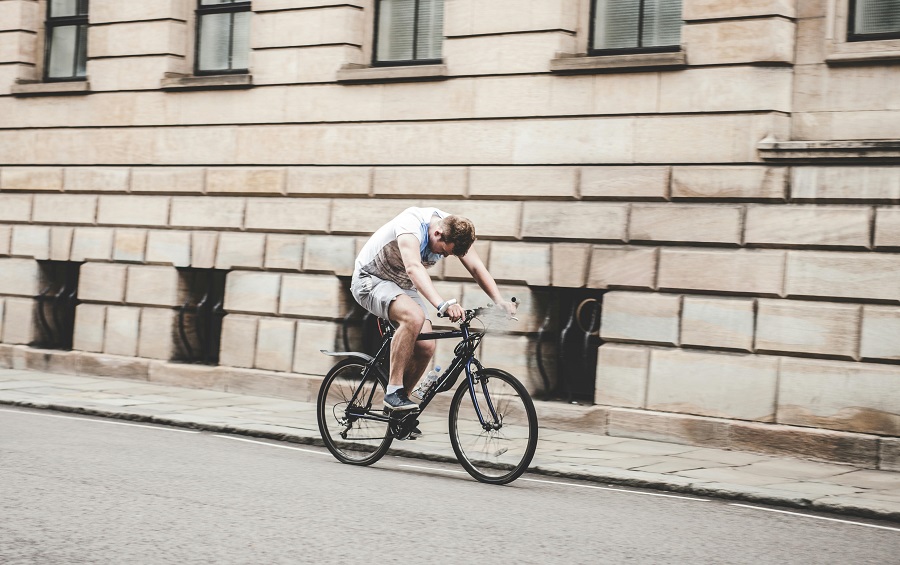
Quick answer: Is it illegal to cycle drunk?
- Cycling drunk is illegal under Section 30 Road Traffic Act 1988.
- Maximum penalty: £1,000 fine (or £2,500 if dangerous cycling).
- No breath test limit exists. Prosecution relies on impairment assessment.
- Driving licence not affected in most cases (unless riding a motorised e-bike).
- Criminal record results but may become spent after rehabilitation period.
If you’ve been arrested or charged with drunk cycling, consider consulting a solicitor specialising in motoring law or road traffic offences to understand your rights and available options.
Is cycling drunk illegal? Your legal position
Yes. It is illegal to ride a bicycle whilst unfit through drink or drugs on a road or public place in the UK. The offence is contained in Section 30 of the Road Traffic Act 1988:
A person who, when riding a cycle on a road or other public place, is unfit to ride through drink or drugs (that is to say, is under the influence of drink or a drug to such an extent as to be incapable of having proper control of the cycle) is guilty of an offence.
The Crown Prosecution Service must establish that you were:
- Riding a cycle.
- On a road or other publicly accessible place.
- Unfit to ride through drink or drugs (lacking proper control).
The offence does not apply to private land where the public has no right of access.
How impairment is assessed:
The term “proper control” means the ability to steer, brake, and balance the bicycle safely. Whether you had proper control is determined by evidence including officer observations, witness statements, and your riding behaviour at the time.
Unlike driving offences, there is no prescribed breath alcohol limit for cyclists. Instead, police assess impairment through observation of:
- Speech quality and clarity.
- Balance and coordination.
- Ability to stand or cycle steadily.
- General demeanour and awareness.
- Riding pattern and adherence to traffic rules.
Police powers and breath testing for cyclists
Police do not normally require cyclists to provide roadside breath tests because the statutory breath-test regime under the Road Traffic Act primarily applies to motor vehicles.
Instead, police assess impairment in cyclists through observation. If a constable reasonably suspects that a cyclist is unfit to ride through drink or drugs, they may:
- Stop you and ask questions.
- Request your name and address.
- Observe your physical state, speech, and behaviour.
- Ask you to perform balance or coordination tasks (you are not legally obliged to cooperate).
- Arrest you if they reasonably suspect an offence.
Breath testing and cyclists:
Breath testing is not a standard part of cyclist impairment assessment. However, in exceptional circumstances (such as following an accident), police may ask for voluntary cooperation with testing. You may decline without legal penalty. However, such refusal may be noted by police and could influence their decision to arrest.
What charges can you face for cycling drunk?
Police may pursue charges under multiple offences following a single incident. Each has a different legal test.
- Section 30 RTA 1988: Cycling under influence
- Legal test: Unfit to ride through drink or drugs.
- Focus: Impairment alone, regardless of harm or quality of riding.
- Section 29 RTA 1988: Careless or inconsiderate cycling
- Legal test: Riding without due care and attention or consideration.
- Focus: Quality of riding (e.g. swerving, failing to stop at traffic lights, riding erratically).
- Section 28 RTA 1988: Dangerous cycling
- Legal test: Riding dangerously in a manner that falls far below a standard reasonably expected.
- Focus: Serious cycling conduct creating obvious danger (e.g. high-speed swerving, riding into oncoming traffic).
Additional possible charge:
If your cycling caused injury, prosecutors may also pursue charges under Section 35 of the Offences Against the Person Act 1861 (wanton and furious cycling). This applies to cases involving injury to another person.
What are the penalties for cycling drunk?
If convicted of cycling drunk, you face fines up to £1,000 under Section 30, or up to £2,500 for dangerous cycling. All convictions result in a criminal record, though records may become spent after a rehabilitation period under the Rehabilitation of Offenders Act 1974.
| Offence | Maximum penalty | Criminal record | Where heard |
| Cycling under influence (Section 30) | £1,000 fine | Yes | Magistrates’ court |
| Careless cycling (Section 29) | £1,000 fine | Yes | Magistrates’ court |
| Dangerous cycling (Section 28) | £2,500 fine | Yes | Magistrates’ court |
| Wanton and furious cycling (Offences Against the Person Act) | Up to 2 years imprisonment | Yes | Crown court (if serious injury) |
Magistrates determine the final penalty using the Magistrates’ Court Sentencing Guidelines, considering factors such as harm, culpability, and the circumstances of the offence.
Actual fines imposed may be significantly less than the maximum. No custodial sentence (imprisonment) is available for Section 30 offences. Imprisonment is only possible under the Offences Against the Person Act if injury resulted and the case is heard in crown court.
Criminal record and spent convictions:
A conviction results in a criminal record. However, under the Rehabilitation of Offenders Act 1974, most cycling offence convictions become “spent” after a rehabilitation period (typically 12 months for fines). Once spent, the conviction does not usually need to be disclosed for most employment, housing, and insurance purposes.
Can you lose your driving licence for cycling drunk?
In most cases, no. Cycling offences do not result in penalty points on your driving licence because Section 30 of the Road Traffic Act 1988 applies only to pedal cycles, not motor vehicles.
However, there is an important exception:
If you are riding a motorised e-bike capable of exceeding 15.5 mph (25 km/h), different rules apply.
E-bikes capable of exceeding 15.5 mph (25 km/h) may be classified as motor vehicles under UK law. If you ride such a vehicle whilst under the influence of alcohol or drugs, you may be prosecuted under drink-driving legislation (Section 5 Road Traffic Act 1988), which does result in:
- Criminal record.
- Potential driving ban.
- Higher fines (typically £1,000+).
- 3–11 penalty points on your driving licence.
Standard pedal bicycles and e-bikes limited to 15mph remain unaffected by cycling-related convictions in terms of driving licence endorsement.
What happens if you’re arrested for cycling drunk?
If arrested for cycling drunk, knowing what to expect at each stage helps you protect your rights and identify when to seek legal advice. Below is the typical procedure.
At the roadside:
- Police stop you on suspicion of Section 30.
- Officers observe and record your state (appearance, speech, smell of alcohol).
- You are asked questions (you may remain silent).
- If suspected offence is identified, you are arrested.
At the police station:
- You are booked into custody; your rights are explained.
- Police record your physical state (detailed observations documented).
- You are interviewed (you have the right to a solicitor. It is advisable to exercise this right).
- You may be released on bail, released under investigation, or charged.
In magistrates’ court:
- You appear and the charge is read.
- First hearing: pleas and bail conditions discussed; legal aid application made if needed.
- Further hearing (if guilty plea): sentencing (fine, criminal record).
- Further hearing (if not guilty plea): trial date set; evidence exchanged.
Do I need a solicitor for cycling drunk charges?
Legal representation is not mandatory, but a solicitor can review the evidence, identify possible procedural issues, and advise on legal options before court proceedings begin.
Benefits of solicitor advice:
- Identify weak evidence: Police observations of impairment can be subjective. A solicitor may challenge the accuracy of recorded speech, balance, and coordination assessments where appropriate.
- Negotiate charge reduction: Before plea, solicitors approach the Crown Prosecution Service to argue for lower charges (Section 30 instead of Section 28) or dismissal if procedural failures are identified.
- Maximise sentence discount: Early guilty pleas negotiated by solicitors attract up to one-third fine reduction. Solicitors also present mitigation to reduce record severity.
Whether you proceed alone or instruct a solicitor depends on the strength of evidence against you and the potential impact on employment and housing.
FAQs
Is it illegal to cycle drunk in the UK? Yes. Section 30 of the Road Traffic Act 1988 makes it an offence to ride a cycle on a road or public place whilst unfit through drink or drugs. The legal test is impairment, not alcohol level. The Crown Prosecution Service must prove you could not maintain proper control of the bicycle.
Can you lose your driving licence for cycling drunk? No, in most cases. Cycling offences do not result in penalty points on your driving licence. Exception: motorised e-bikes (over 15mph) are classified as motor vehicles, so drink-riding rules apply and you may receive points, a ban, or disqualification.
Do you get a criminal record for cycling drunk? Yes. Conviction results in a criminal record. However, under the Rehabilitation of Offenders Act 1974, most cycling offences become spent after 12 months. Once spent, disclosure is usually not required for employment, housing, or insurance.
Cycling whilst under the influence is illegal in the UK. Penalties include fines, criminal records, and employment impact. Early legal advice identifies procedural weaknesses and negotiation opportunities. The strength of evidence against you determines your best course of action.
This article is general legal information and does not constitute legal advice. Consult a solicitor for advice specific to your circumstances.
Facing drunk cycling charges?
Qredible’s network of motoring solicitors specialises in road traffic offences and can assess your case. Get clarity on your legal position and realistic outcomes.
NEXT STEPS:
- Document everything. Write down immediately: date, time, location, officer names, what was said, witnesses, and your account. This protects your memory for your solicitor.
- Request your police file. Ask the Crown Prosecution Service for copies of the police statement, officer observations, and witness statements. You have the right to see this evidence.
- Consult a solicitor before court. Most offer free initial consultations. Early advice identifies negotiation opportunities and realistic outcomes.
Articles Sources
- slatergordon.co.uk - https://www.slatergordon.co.uk/newsroom/is-it-illegal-to-ride-a-bicycle-when-drunk/
- expresssolicitors.co.uk - https://www.expresssolicitors.co.uk/blog/is-it-illegal-to-ride-a-bike-drunk-heres-what-you-need-to-know
- alderstonesolicitors.co.uk - https://www.alderstonesolicitors.co.uk/serious-injury/road-rules-revisited-is-it-illegal-to-ride-a-bike-while-drunk/
Article history
Our team regularly updates Qredible content to ensure clear, up-to-date, and useful information for as many people as possible.
Do you need a solicitor?
Find a solicitor on Qredible in just a few easy steps






Find a solicitor
With over 2,000 solicitors listed, find the one best suited to your needs. We will then help you get in touch.
Contact a solicitorRecent posts