Divorce in Scotland: how to apply, costs, simplified vs ordinary procedure
Most people assume divorce is just a form. In divorce in Scotland, that assumption is where irreversible errors begin. Choose the wrong route, and you risk delay or loss of rights. A simplified divorce Scotland is fast and low-cost, but only in tightly defined cases. Where children or finances exist, the ordinary divorce Scotland procedure applies. The smartest move early on is to speak to a Scottish family law solicitor specialising in divorce and financial provision before you file anything.
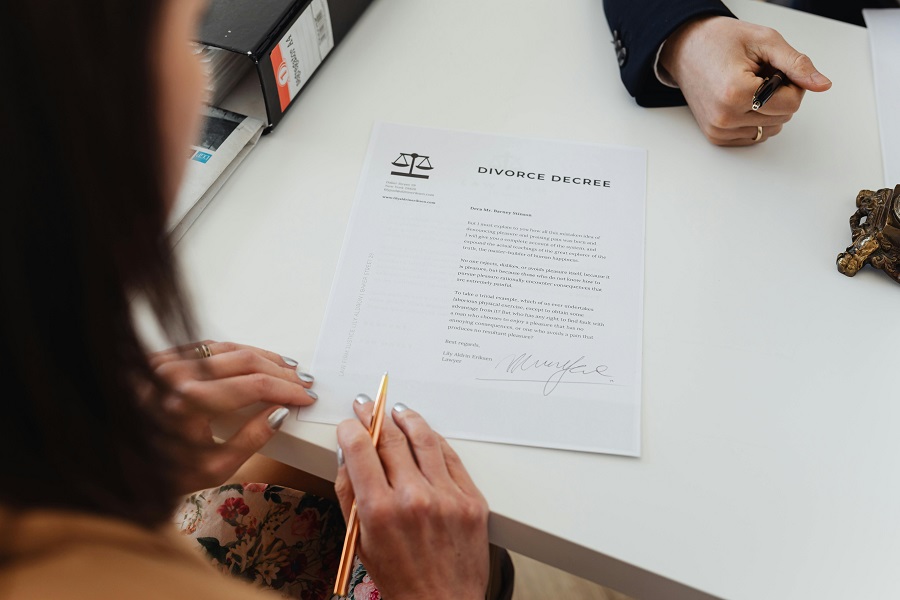
Quick answer: How do I get a divorce in Scotland and which procedure should I choose?
To get a divorce in Scotland, you must choose between a simplified divorce Scotland (only if there are no children under 16 and no financial claims) or an ordinary divorce Scotland for all other cases. Choosing the wrong route can delay your divorce or affect your rights.
Read this guide to move forward with clarity.
What is divorce in Scotland and how does it work?
Divorce in Scotland ends a marriage by court decree under the Divorce (Scotland) Act 1976. You must prove legal grounds and follow the correct procedure.
In practice, this means:
- Prove irretrievable breakdown.
- This is usually shown by separation (1 year with consent or 2 years without).
- You must meet jurisdiction rules (domicile or habitual residence in Scotland).
- Your case is handled by either the sheriff court or the Court of Session.
Simplified divorce Scotland vs ordinary divorce Scotland: which should you choose?
Choosing between simplified divorce Scotland and ordinary divorce Scotland determines whether your application succeeds or is rejected.
| Decision factor | Simplified divorce Scotland | Ordinary divorce Scotland |
|---|---|---|
| Children under 16 | Not allowed | Allowed / required |
| Financial claims | No | Yes |
| Typical speed | Weeks–months | Months–years |
| Court involvement | Paper process; usually no hearing | Case management, possible proof hearing |
Put simply:
- Use simplified divorce Scotland only if fully agreed.
- The moment children under 16 are involved, you must use ordinary divorce Scotland.
- Any financial claim (property, savings, pensions) automatically requires the ordinary route.
- Ordinary divorce Scotland allows court decisions on disputes.
Who qualifies for a simplified divorce Scotland (and who does not)?
A simplified divorce Scotland is only available in tightly defined situations. If you fall outside these criteria, you must use the ordinary divorce Scotland procedure.
You qualify only if all of the following apply:
- The marriage has irretrievably broken down.
- There are no children of the marriage under 16.
- There are no financial claims or disputes (property, savings, pensions).
- There are no ongoing court proceedings affecting the marriage.
- You meet residence or domicile requirements in Scotland.
You do not qualify if:
- There are children under 16 involved.
- Either party intends to make a financial claim.
- The case is disputed or complex in any way.
How to apply for a simplified divorce Scotland (forms, steps and court process)
A simplified divorce Scotland follows a structured paper-based process. Errors can lead to rejection or delay.
The steps are:
- Complete the prescribed form: use Form 1 or Form 1A (the official simplified divorce Scotland forms).
- Lodge the application at the appropriate sheriff court (or Court of Session in limited cases) based on residence/domicile.
- Arrange service on your spouse in line with court rules and provide proof of service.
- Court review: the court checks eligibility and paperwork; if all criteria are met the decree is usually granted without a hearing.
How to apply for an ordinary divorce Scotland (procedure and legal stages)
An ordinary divorce Scotland resolves disputes about children or finances and usually requires legal representation.
The steps are:
- Raise the action: start proceedings by lodging an initial writ (or summons in the Court of Session) setting out your case.
- Defences and responses: the other party may lodge defences, confirming agreement or disputing claims.
- Case management: the court may timetable the case, order disclosure of financial information, and encourage settlement.
- Proof hearing (if needed): where facts are disputed, the court hears evidence and makes findings.
- Decree of divorce: once issues are resolved, the court grants decree, including any orders on finances or child arrangements.
Example:
A party raises an initial writ; the other lodges defences disputing finances and child contact. After disclosure and a proof hearing, the court issues decree with financial and child orders.
How much does a divorce cost in Scotland (court fees and solicitor costs)
The cost of a divorce in Scotland depends on whether you use a simplified divorce Scotland or ordinary divorce Scotland procedure, and whether a solicitor is involved.
Typical costs include:
- Simplified divorce Scotland (court fee): ~£130–£150 (typical range; check Scottish Courts fee guidance).
- Ordinary divorce Scotland (court fees): variable; multiple fees may apply. Expect higher and multiple court fees.
- Solicitor fees (typical ranges):
- Fixed fee divorce Scotland (uncontested / simple): £300–£1,000+.
- Contested / complex ordinary divorce Scotland: £1,000–£5,000+ (can be higher where property, pensions or lengthy hearings are required).
Fee exemptions:
Reduced or waived court fees may be available if you receive qualifying benefits.
How long does a quick divorce Scotland take?
The timeline for a quick divorce Scotland depends on the procedure.
Typical timeframes:
- Simplified divorce Scotland: usually a few weeks to a few months if forms are correct and service is properly carried out.
- Ordinary divorce Scotland: typically several months to over a year, especially where finances or child arrangements are disputed.
- Delays can occur if documents are incorrect, service fails, or the court requires additional information or hearings
DIY divorce Scotland: can you do it yourself and what are the risks?
A DIY divorce Scotland is possible, but only in strictly limited situations, typically where you qualify for a simplified divorce Scotland and there are no disputes.
When you can proceed yourself:
- Your case meets all simplified divorce Scotland criteria.
- There are no children under 16.
- There are no financial claims or disputes.
Risks to consider:
- Application rejected due to incorrect forms or defective service.
- Loss of financial rights: a simplified decree can close off future claims (property, savings, pensions).
- Legal gaps: important issues may be overlooked without advice.
- Procedural delays if documents are incomplete or inaccurate.
Do I need a solicitor for divorce in Scotland?
Instructing a divorce lawyers Scotland specialist is not always mandatory, but it is often the safest way to protect your position, especially where finances, property or children are involved.
Benefits of instructing a solicitor:
- Protect your financial outcome: ensure property, savings and pensions are properly identified, valued and secured.
- Avoid procedural errors and delays: correct forms, service and court steps handled efficiently.
- Achieve a faster, more balanced resolution: strategic advice reduces disputes and strengthens your position.
FAQs
How to get a divorce in Scotland?
Apply using either a simplified divorce Scotland or ordinary divorce Scotland procedure, depending on eligibility, using the appropriate Scottish Courts forms.
How much does a divorce cost in Scotland?
Costs vary by procedure and complexity; simplified divorce Scotland has lower court fees, while ordinary divorce Scotland may involve higher solicitor and court costs.
Simplified divorce form Scotland?
Use the official simplified divorce Scotland forms (Form 1 or Form 1A) available from the Scottish Courts website.
This is general information, not legal advice. For case‑specific guidance contact a solicitor.
Choosing the correct divorce in Scotland route is decisive. A simplified divorce Scotland offers speed and lower cost but suits limited cases. Where children or finances exist, the ordinary divorce Scotland process protects long-term rights.
Get expert help with your divorce in Scotland
Consult Qredible’s network of Scottish family solicitors for a fast, secure review and fixed‑fee options.
KEY TAKEAWAYS:
- Choosing between simplified divorce Scotland and ordinary divorce Scotland depends on children and finances.
- Simplified cases are faster and cheaper; ordinary procedures take longer and involve more steps.
- Early advice from divorce lawyers Scotland helps avoid delays and protect financial rights.
Articles Sources
- scotcourts.gov.uk - https://www.scotcourts.gov.uk/taking-action/divorce-and-dissolution-of-civil-partnership/simplifieddo-it-yourself-procedure/
- citizensadvice.org.uk - https://www.citizensadvice.org.uk/scotland/family/relationship-problems-s/getting-divorced-s/
- rooneyfamilylaw.co.uk - https://www.rooneyfamilylaw.co.uk/simplified-divorce/
- caritaslegal.co.uk - https://www.caritaslegal.co.uk/get-a-divorce-in-scotland-process-paperwork-and-costs-guide
Article history
Our team regularly updates Qredible content to ensure clear, up-to-date, and useful information for as many people as possible.
Do you need a solicitor?
Find a solicitor on Qredible in just a few easy steps






Find a solicitor
With over 2,000 solicitors listed, find the one best suited to your needs. We will then help you get in touch.
Contact a solicitorRecent posts